Key Takeaways
- Arlington posted a record $31 million lodging month in June, with nightly rates up nearly 47 percent.
- The promised $1.5 billion regional impact has a measured counterpart of about $160 million through eight matches.
- The average Dallas Airbnb host cleared roughly $4,400 across the five-plus-week window. The professionals captured the upside.
- No measurable World Cup bump shows up in DFW home values; the market softened right through the tournament.
- Mega-events are a hospitality trade. Your home's value still runs on supply, rates, and pricing discipline.
Arlington just posted the single best month for lodging in its history. Hotels and short-term rentals around AT&T Stadium pulled in a record $31 million in June 2026, according to FOX 4, driven by nightly room rates that ran nearly 47 percent higher than normal. The old monthly record was about $23.6 million, set in late 2024. So June came in roughly $7.4 million above the previous best, about a third higher than the city had ever done before.
That is a real number, and hotels earned it. But "record hotel month" is the easy headline. The harder question, the one that matters if you own a home or a rental anywhere near the stadium, is who actually kept the money once the tents came down and the crews started peeling the FIFA signage off the building.
AT&T Stadium, rebranded "Dallas Stadium" for the tournament, hosted nine matches over 31 days, the most of any of the 16 host venues, closing with a Spain 2, France 0 semifinal on July 14. Crews started peeling off the FIFA branding the next morning. The circus is gone. The receipts stay. Here is what they say.
What Actually Drove the Money
The engine was simple: too many people, not enough rooms, for 31 straight days.
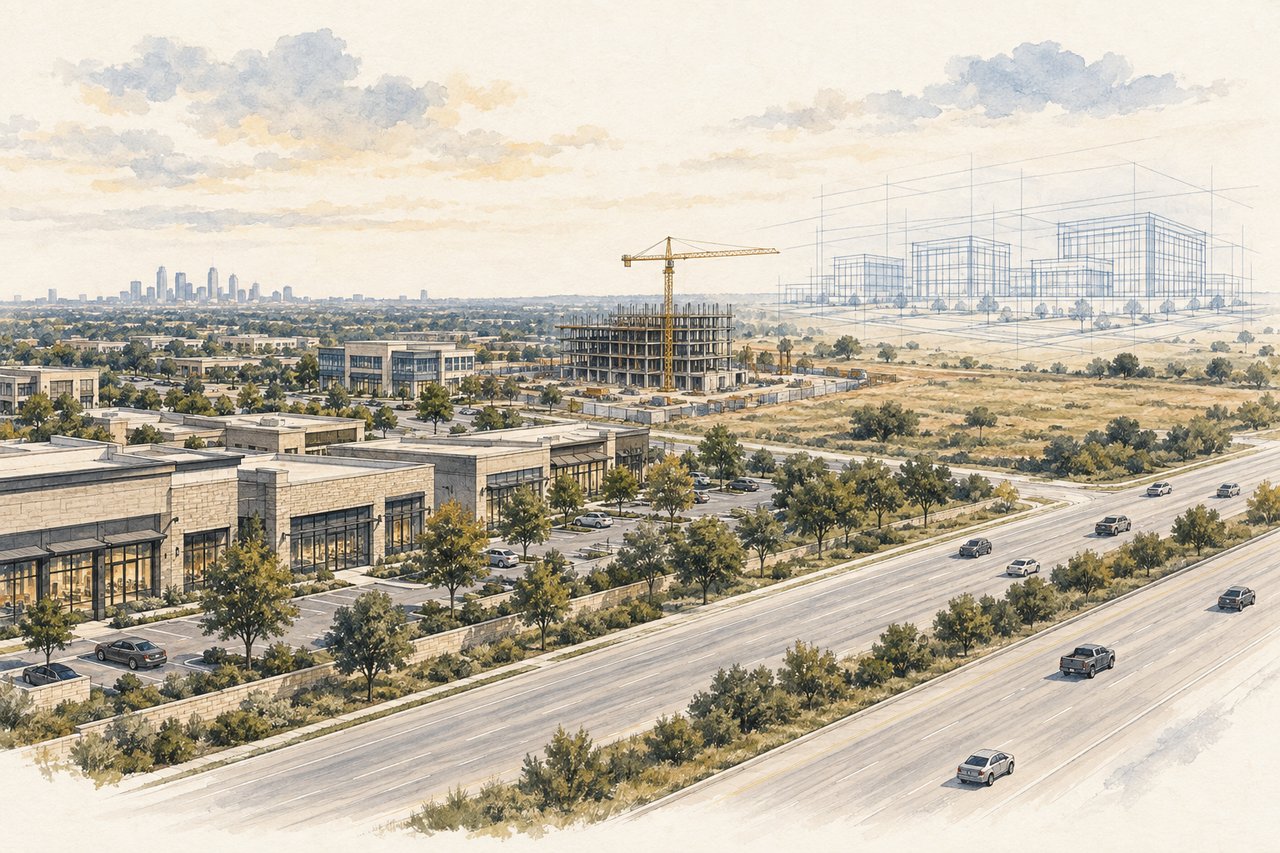
Nine matches at up to 70,000-plus seats each, plus a FIFA Fan Festival at Fair Park capped at 35,000 people at a time, put a concentrated wall of demand on a fixed supply of hotel rooms. When you cannot add rooms, price does all the work. That is the entire story behind the 47 percent rate jump. Arlington did not suddenly have more to sell; what it already had briefly became the most expensive lodging in North Texas.
That distinction tells you who wins in a mega-event and who does not. The winners flex price against a fixed footprint: hotels, parking, and the bars and restaurants inside the stadium's gravity. The disappointed are everyone counting on the crowd to wander their way.
Where It Actually Landed
Hotels won cleanly. Short-term rental hosts had a messier month than the headlines suggest, and downtown Arlington was a coin flip.
Start with rentals, because that is where a lot of DFW homeowners quietly placed a bet. The listed prices looked euphoric. Short-term-rental data firm AirROI measured Dallas listing rates up about 34 percent and booking pace up about 58 percent comparing the weeks before and after the group-stage draw. But listed is not booked. Heading into the tournament, AirDNA data cited in coverage pegged the average Dallas short-term rental at about $221 a night actually booked. The gap between the rate a host hoped for and the $221 the market actually paid is the whole story of amateur hosts in a mega-event.
The rollup confirms it. A Deloitte analysis, cited by AirROI, projected the average Dallas Airbnb host would clear roughly $4,400 total across the entire five-plus-week window, in a market where the typical host earns about $20,413 a year on roughly 26 percent occupancy. A good month, not a windfall. The hosts who cleaned up were already running professional operations in the right zip codes; the ones who threw a spare bedroom online expecting a windfall met the $221 booked-rate reality.
Downtown Arlington split the same way. Per KERA, J. Gilligan's Bar and Grill ran sales "four to five times" normal on match days and shuttled 1,300-plus fans, while a thrift store, a bookstore cafe, and a jewelry shop reported flat or disappointing results, because the crowd concentrated at the stadium and Fan Fest and never spread into the rest of downtown. The Greater Arlington Chamber CEO called it "quintessential Texas": the experience businesses in the flight path won, and the rest watched the traffic drive past.
The Hidden Math: A $1.5 Billion Promise, a $160 Million Receipt
Here is the number that got Dallas the World Cup, and the number that actually showed up.
Before kickoff, Dallas-area officials projected at least $1.5 billion in regional economic impact, per KERA. That is the figure that sells a bid. The measured version: Arlington's own estimate through the first eight of nine matches reached about $160 million, per CBS Texas. Do the division the officials would rather you skip. $160 million across eight matches is about $20 million per match; add the ninth at the same clip and Arlington's all-in estimate lands near $180 million.
So the hard, measured local number is roughly $180 million. The promotional number was $1.5 billion. Even granting that "regional" is a bigger geography than the city of Arlington, the only measured figure anyone can point to today is about one-eighth of the promise. And even that is an estimate, not an audit: officials said the final total will take four to six weeks to calculate, so no complete audited number exists yet. It should land in mid-to-late August, worth checking against the billion-and-a-half.
The whole ledger, on one receipt:
Line item | Amount | Source |
|---|---|---|
Promised regional impact (pre-tournament) | $1.5 billion | Dallas-area officials, per KERA |
Measured impact, first 8 of 9 matches | ~$160 million | City of Arlington estimate, per CBS Texas |
Implied all-in for 9 matches | ~$180 million (derived, $20M/match) | Our arithmetic, shown above |
Record June lodging revenue, Arlington | $31 million | FOX 4 |
Federal security reimbursement, North Texas | ~$51 million | FEMA pool, per NBC 5 |
Dallas's own security budget | $32-47 million | Per KERA |
Now the counterweight nobody prints next to the revenue. North Texas received about $51 million from a federal FEMA reimbursement pool for World Cup security, with $22 million to Dallas Police alone, per NBC 5. Dallas budgeted between $32 million and $47 million of its own, per KERA. Set the $51 million reimbursement against Arlington's $160 million measured impact and the security tab runs close to a third of the headline benefit, just for the piece taxpayers had to be paid back for. Promotional impact numbers almost never subtract this. The receipt does.
What Mega-Events Actually Change (and What They Don't)
This is not a Dallas problem. It is a mega-event problem, and economists have measured it for thirty years.
The clean historical case is the last time the World Cup came to the United States. Robert Baade and Victor Matheson, the most-cited pairing in sports economics, found the actual impact of the 1994 USA World Cup fell short of pre-tournament projections by somewhere between $5.5 billion and $9.3 billion. The promised boom underdelivered by more than the entire event was later measured to be worth. The pattern is consistent: the studies commissioned to justify the bid systematically overstate the benefit and understate the public cost.
The reason is structural, and it is the same reason Arlington's hotels won while its bookstore did not. A mega-event reshuffles spending in time and space more than it creates it. Hotels, which can reprice a fixed supply, capture the surge. But much of the "new" spending is displaced spending: locals who avoid the crowds, conventions that reschedule, businesses outside the footprint that go quiet. Hospitality genuinely wins. The broad regional economy mostly rearranges.
Which is exactly what the local experts said out loud, before kickoff, while the city was still selling the billion-and-a-half.
The Part the City's Victory Lap Skipped
Arlington Mayor Jim Ross summed up the hosting job, per WFAA: "We have set the standard." On execution, fair. The security operation ran 34 straight days, bracketing the 31-day match window on both ends, and drew an "A-plus" from the federal task force.
But "well run" and "great investment" are different claims, and the economists whose job is to tell them apart were on record weeks earlier. In a June KERA report, SMU economics professor Cullum Clark put it plainly: the region would get "something of a little boomlet in sales tax revenue that lasts for a few weeks, and then it just goes back to where it was before." UT Dallas economist Steven Haynes flagged the cost side: "You don't really know how much you're gonna spend until the check's been signed," warning that security costs could eat the visitor spending.
Neither is anti-Dallas. They are describing the same gap Baade and Matheson measured in 1994, and the same gap you can already see between $1.5 billion promised and $160 million measured. The victory lap is about how the party went. The economists are talking about the bill.

What Nine Matches Did, and Did Not Do, to DFW Home Values
Now the question we actually get paid to answer: what did the World Cup do to what your house is worth?
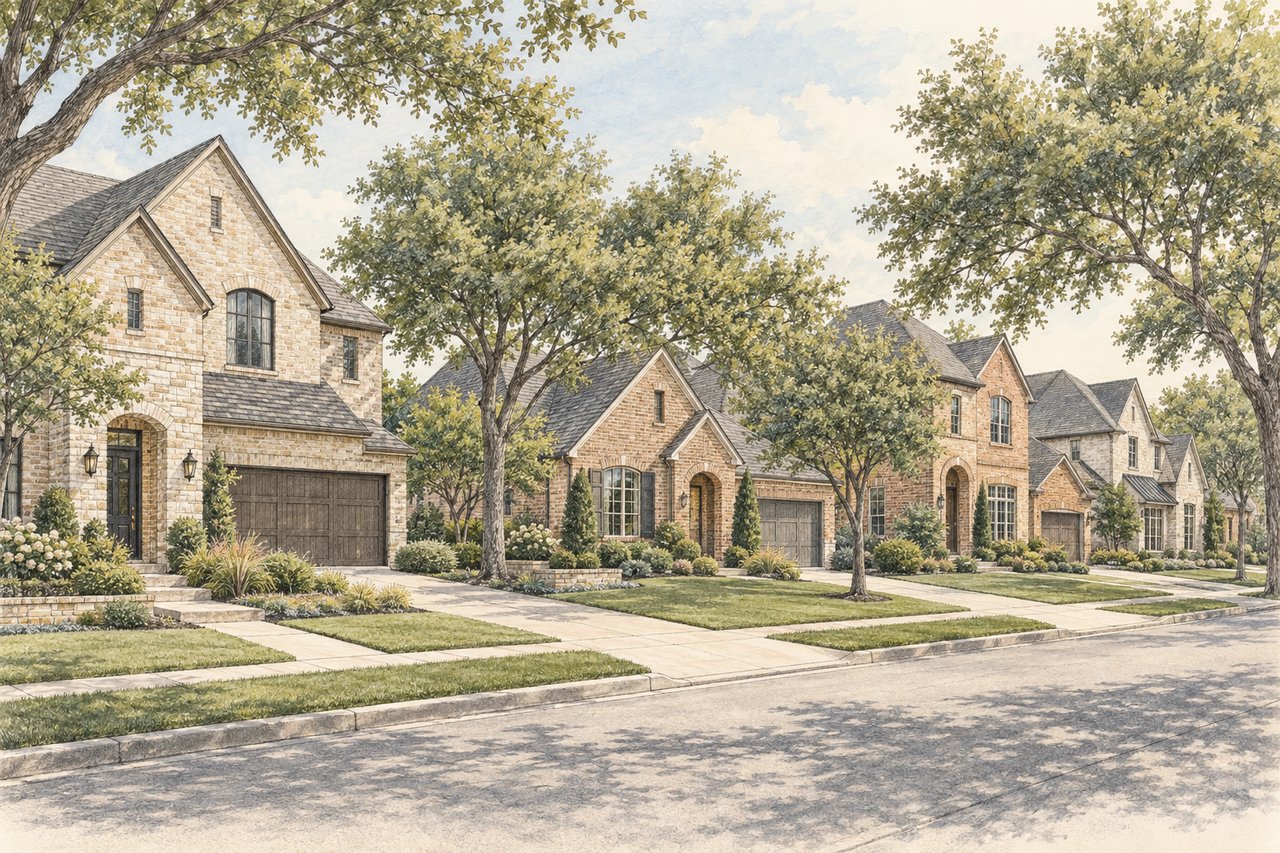
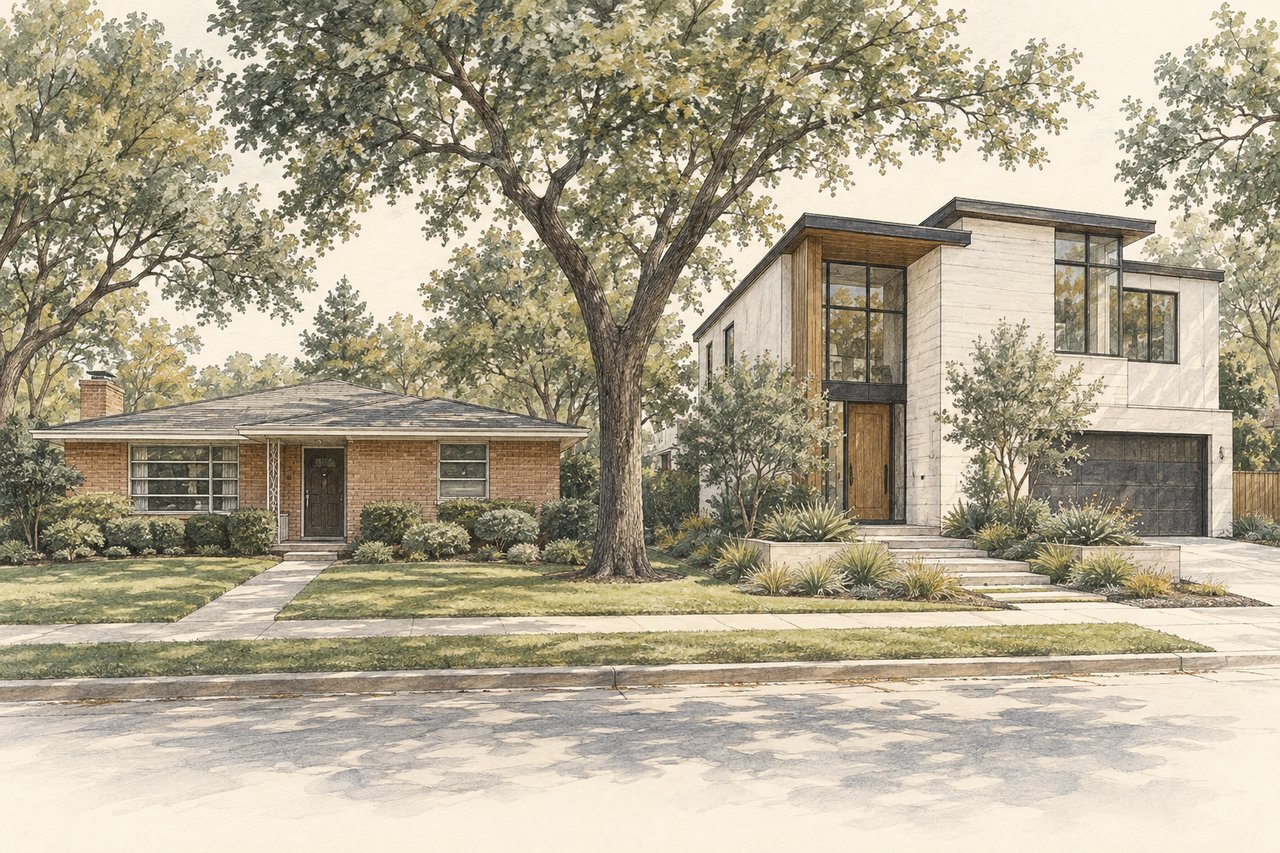
Here is the honest finding, and the honesty is the point. We went looking for a measurable World Cup effect on DFW home sale prices, and there is not one. No credible source in the record shows a home-price bump, up or down, tied to the tournament. That absence is not a gap in the reporting. It is the answer. A month-long event that reprices hotel rooms does not reprice the houses around them, because nobody buys a four-bedroom in Grand Prairie because a semifinal was played six miles away in July.
The one place the event genuinely touched residential real estate was the short-term rental market, and even there the effect was a temporary spike in nightly rates, not a change in what the underlying homes are worth. A month of $221 nights does not add durable value to a house. It adds one good month to a rental P&L.
For perspective on where DFW home values actually sat during all this, look at our own MLS numbers from the same window. Across the northern growth corridor, second-quarter median sale prices were flat to down year over year: Frisco's median closed price was down 3.2 percent and Celina's was down 8.8 percent. The metro's housing market was gently softening on its own fundamentals straight through the tournament. The World Cup did not move that needle either way. Anyone who tells you the event lifted DFW home values is selling something.
So what does it mean now that the circus has left town? If you own near the stadium and were counting on a World Cup "halo" to lift your resale price, let it go. It was never in the data. Price your home on comps, condition, and roof age, the same inputs that drove value in May and will in September.
If you are a short-term rental owner-investor, the read is more useful. The tournament was a one-time demand event, not a new baseline. Underwrite on trailing occupancy, which in this market runs around 26 percent, not on the 47 percent rate spike of a single June. The hosts who get hurt are the ones who buy a second property this fall using a World Cup month as the comp. That is buying the peak and financing it for thirty years.
The Honest Counterargument
Now the case for the event, made fairly.
The record tourism revenue is real. $31 million in a single month is not a rounding error, and the hospitality sector, the hotels, the stadium-adjacent restaurants, the parking operators, genuinely won. Thousands of workers got extra shifts. The skeptics are not claiming otherwise.
The stronger pro-event argument does not fit on a spreadsheet: reputation and infrastructure. UNT's Bob Heere argued the biggest payoff may be showing the region to the corporate site-selectors who decide where headquarters and factories land, a benefit that shows up years later as relocations, not this summer as sales tax. The security muscle carries forward, and the venue is already shortlisted among proposed U.S. sites for the 2031 Women's World Cup. Those benefits are real, just slow, diffuse, and impossible to put in a July press release. Which is why the smart read is to bank the hard number, $180 million or so, respect the soft benefits without pretending to measure them, and ignore the billion-and-a-half.
What to Actually Do With This
- If you own near the stadium: do not price a World Cup premium into a sale. It is not in the comps. Value your home on the same fundamentals as any other DFW listing.
- If you own or are shopping a short-term rental: treat June as one exceptional month, not a run rate. Underwrite on trailing occupancy and booked rates, and be suspicious of any seller using a World Cup month as the income comp. Ask for the trailing twelve months, not the highlight reel.
- If you are a buyer or seller anywhere in DFW: the event changed nothing about your deal. Rates, supply, roof age, and condition still run the market. The corridor is flat to softening, a buyer's opening, not a seller's tailwind.
The Paragon Angle
Here is the read we give clients, and it is not the one in the press releases: mega-events are a hospitality trade, not a housing trade. The money showed up exactly where beds rent by the night and left everything else alone. That is not a World Cup quirk. It is how stadium economics have always worked in this metro, and we have watched it play out for two decades a short drive away, where the American Airlines Center was supposed to mint a neighborhood and the district around it spent twenty years becoming something else. We wrote that story up separately, and the rhyme is exact: the venue wins, the promises float, the houses answer to supply and rates like they always did.
So the practical read. If you own near the stadium, the event premium is a rental-night premium, not a resale premium; price your house on comps, not on confetti, because the buyer's lender certainly will. If you run a short-term rental, June was the tell: the operators who profited were already professionals with pricing tools, and the market paid $221 a night no matter what anyone listed at. And if you are waiting for the next circus to lift your value, notice what actually endures after this one: practiced infrastructure, a convention resume, and a hotel tax base. Those pay off the city over decades. Your house gets paid by the same three things it did in May: supply, rates, and pricing discipline.
Frequently Asked Questions
Did the World Cup raise home values in Dallas or Arlington?
No measurable effect exists in the data, up or down. A month-long event reprices hotel rooms, not the houses around them. During the tournament, DFW median sale prices in the northern corridor were flat to down year over year on ordinary fundamentals. If someone claims the World Cup lifted your home's value, ask them for the number. There isn't one.
How much money did the World Cup actually make for Arlington?
Arlington's own estimate through the first eight of nine matches was about $160 million, per CBS Texas, roughly $20 million per match. Add the ninth and the local all-in estimate is near $180 million. Officials said the final audited total would take four to six weeks to calculate after the July 14 semifinal, so a complete figure should surface in mid-to-late August 2026.
What happened to the $1.5 billion economic impact projection?
That was a pre-tournament regional projection from Dallas-area officials, per KERA. The only measured local number so far is Arlington's roughly $160 million through eight matches; extended to all nine, the estimate lands near $180 million, about one-eighth of the projection. Economists at SMU and UT Dallas warned before kickoff that the projection was likely overstated, consistent with the 1994 U.S. World Cup, which Baade and Matheson found undershot its projections by $5.5 billion to $9.3 billion.
Should I buy a short-term rental near AT&T Stadium after the World Cup?
Underwrite it on normal demand, not the tournament. This market's trailing occupancy runs around 26 percent, and the typical host earns about $20,413 a year, per AirROI. A Deloitte analysis projected the average Dallas host cleared roughly $4,400 across the five-plus-week event. That is one strong month, not a new baseline. Using a World Cup month as your comp means buying the peak.
Did short-term rental hosts get rich during the World Cup?
Most had a good month, not a jackpot. Listed rates spiked, but the average Dallas rental booked around $221 a night heading into the tournament, per AirDNA figures cited in pre-tournament coverage. The operators who profited most were already professional; amateurs mostly met the booked-rate reality.
Was the World Cup worth it for Dallas taxpayers?
Depends what you count. Hospitality genuinely won, and $31 million in record June lodging revenue is real. But North Texas needed about $51 million in federal security reimbursement, and Dallas budgeted $32 million to $47 million of its own, per KERA and NBC 5. The hard economic benefit is real but smaller than promised; the reputational payoff is real but slow. Reasonable people land differently on the trade.
Conclusion
The World Cup gave North Texas a real gift, just not the one on the billboard. Hotels banked a record month, Arlington built a hosting resume that will win it more events, and the region proved it can run a 34-day security operation that earns federal praise. What it did not do is change what any house in this metro is worth, and the measured numbers say so plainly: a $160 million estimate against a $1.5 billion promise, and a housing market that kept softening straight through the confetti.
The forward story is worth watching with clear eyes. The final audited total lands in mid-to-late August, and it deserves a comparison against the promise. Dallas is already named in the 2031 Women's World Cup proposal, which means the same projections will be back with new letterhead. When they arrive, the receipts from this summer are the honest baseline: hospitality wins, houses answer to supply and rates, and the difference between a projection and a receipt is the whole game. We will keep publishing the receipts.
Talk to Paragon
Ready to separate the headlines from what your property is actually worth? Let's connect and discuss your goals: call (469) 290-7593 or visit paragondfw.com/contact.
We work across the DFW market, and we spend a lot of time separating the story a headline tells from the number a deal actually turns on. If you own near the stadium, run a short-term rental, or are weighing a buy or sale anywhere in the metroplex, we are glad to give you a clear-eyed read on what a specific property is really worth, minus the hype.
No agenda. Just the analysis.
Reach us at [email protected] or call (469) 290-7593. More at paragondfw.com.
Sources
- FOX 4 Dallas-Fort Worth - Arlington World Cup matches boost local economy with record hotel revenue - https://www.fox4news.com/news/arlington-world-cup-matches-boost-local-economy-record-hotel-revenue
- CBS Texas - Here's who's playing in Arlington for 2026 FIFA World Cup matches - https://www.cbsnews.com/texas/news/2026-fifa-world-cup-matches-arlington-att-dallas-stadium/
- CBS Texas - Arlington estimates $160 million of economic impact from the FIFA World Cup so far - https://www.cbsnews.com/texas/news/fifa-world-cup-economic-impact-arlington-texas/
- KERA News - FIFA says the World Cup will be big for the North Texas economy. Experts aren't so sure - https://www.keranews.org/business-economy/2026-06-10/fifa-world-cup-economic-impact-projections-for-dallas-exaggerated
- KERA News - Here's what downtown Arlington businesses say about World Cup impact - https://www.keranews.org/news/2026-07-10/heres-what-downtown-arlington-businesses-say-about-world-cup-impact
- NBC 5 Dallas-Fort Worth - FEMA to reimburse North Texas agencies after World Cup security effort - https://www.nbcdfw.com/news/local/fema-to-reimburse-north-texas-agencies-after-world-cup-security-effort/4049538/
- NBC 5 Dallas-Fort Worth - AT&T Stadium returning to normal signage, branding after nine 2026 World Cup matches - https://www.nbcdfw.com/world-cup/att-stadium-returning-to-normal-signage-branding-after-9-2026-fifa-world-cup-matches/4049739/
- AirROI - FIFA World Cup 2026 Airbnb Data: How the Group Draw Reshaped STR Demand Overnight - https://www.airroi.com/blog/world-cup-2026-airbnb-impact
- Clemson University (Baade and Matheson) - The Quest for the Cup: Assessing the Economic Impact of the World Cup - https://media.clemson.edu/economics/data/sports/Stadiums%20and%20Econ%20Impact/worldcup.pdf
- ESPN - Women's World Cup 2031: U.S. proposes 14 host stadiums - https://www.espn.com/soccer/story/_/id/47129146/fifa-womens-world-cup-2031-host-stadiums-usa-mexico
- WFAA - Arlington Mayor Jim Ross: "We have set the standard" - https://www.wfaa.com
- Local market figures: Paragon MLS warehouse (NTREIS), pulled 2026-07-18.