Key Takeaways
- Celina grew 24.6 percent in a single year, the fastest of any U.S. city over 20,000 residents, while the median new-home closed price fell 22 percent to $520,000.
- Builders control 66 percent of the market and price about $25 per square foot under resale, which is roughly $67,500 on a typical home. The sharper gap is on the payment: a builder rate buydown can beat a resale seller by about $539 a month in year one.
- Celina's median has slipped below McKinney's, but per square foot Celina is still cheaper, so the crossover is partly a size and mix effect, not a pure premium collapse.
- The lower sticker hides a higher bill. Celina's combined tax rate is $2.0428 per $100 versus McKinney's $1.7471, and one verified Celina PID adds $2,004.99 a year. Run together, a Celina home can cost about $3,479 a year more to carry than a same-priced McKinney home.
- Frisco ran this exact play in the 2000s and normalized. The frontier discount is now migrating to Anna, Princeton, and Melissa. Buyers hold the leverage in the corridor right now.
Celina, Texas grew faster than any other city in America last year. It also got cheaper to buy a home there. Those two facts sound like they cannot both be true. They are.
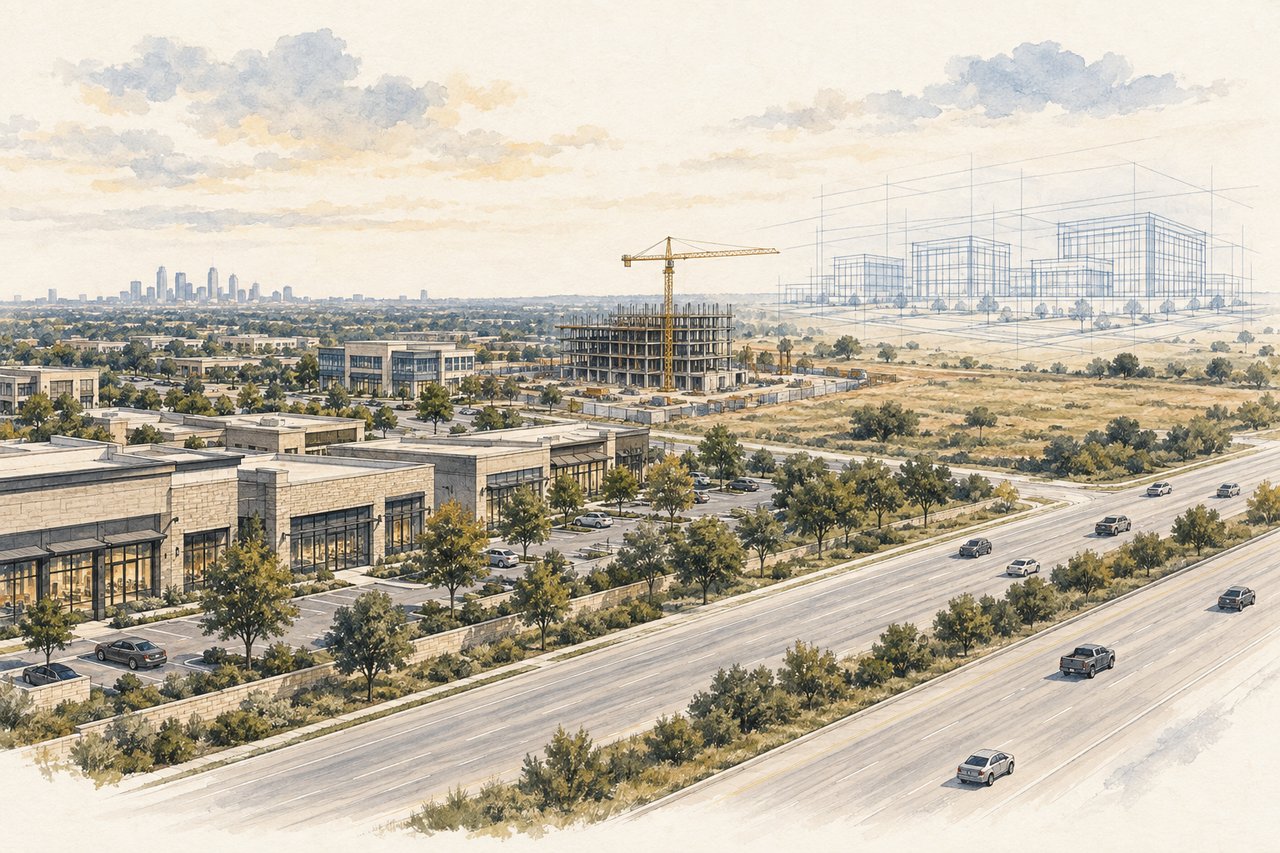
The U.S. Census Bureau's Vintage 2025 estimates, released May 14, 2026, name Celina the fastest-growing city in the country among places over 20,000 residents. The city added 12,710 people in twelve months, from 51,717 to 64,427, a growth rate of 24.6 percent, and it topped the same national list in the 2023 vintage too. Four of the five fastest-growing large cities this cycle sit in Collin County, per CBS Texas: Celina, Princeton, Melissa, and Anna. At the same time, The Real Deal reported Celina's median new-home closed price fell 22 percent to $520,000 for the twelve months ending April 2026, while new-home sales rose 61 percent and overall sales rose 39 percent. More people, more homes changing hands, lower prices. That is the paradox.
Our own local MLS data, which we pull directly because Texas is a non-disclosure state where national portals only estimate these numbers, confirms it. Celina's citywide median closed price sat at $515,000 in the second quarter of 2026, down 8.8 percent from a year earlier. Among active listings, 60.2 percent have taken a price cut, a median reduction of $31,000.
What Is Actually Driving It
This is not a demand problem, sales volume is up sharply. It is a supply problem of a specific kind. Builders now account for 66 percent of everything selling in Celina, against 34 percent resale, and they are pricing under the existing stock: the builder median across our warehouse is $520,000, or $183 per square foot, against a resale median of $550,000, or $208 per square foot. That $25 per square foot gap is the mechanism.
Finish the multiplication, because the per-foot number hides the real one. The builder median of $520,000 at $183 per square foot works out to roughly 2,842 square feet, and $25 per square foot on a home that size is about $71,000; on a more typical 2,700 square foot floor plan it is about $67,500. That is the whole-home gap a resale seller is fighting: not $25 a foot in the abstract, but a $67,500 head start the builder hands every shopper who walks into the model home.
Franceanna Campagna, chair of the MetroTex Association of Realtors, put it plainly to The Real Deal: "The amount of new home construction Celina has experienced over the past several years is just extraordinary." Builders with locked-in land basis and volume incentives can sell for less than a homeowner needs to clear on a house bought two or three years ago. That is the structural change under the headline: a 2021 to 2023 buyer did not just buy at a cyclical peak, they bought into a market that has since filled in around them with builder inventory priced below what their home needs to command.
The Builder Owns the Rate, and You Do Not
Nobody buys a house by the foot. They buy it by the monthly payment, and the builder controls a lever the resale seller down the street cannot touch: the mortgage rate.
DFW builder incentives this year run 2/1 rate buydowns landing year-one effective rates near 3 percent, on top of $10,000 to $30,000 in flex cash. A 2/1 buydown that lands year one near 3 percent implies an underlying note rate around 5 percent, which the resale buyer next door pays from day one. Take the $520,000 builder median with 10 percent down, a $468,000 loan (an illustrative assumption, shown so you can recompute it). At a bought-down 3 percent, first-year principal and interest run about $1,973 a month. The same $468,000 at a 5 percent note rate runs about $2,512. That is a gap of roughly $539 a month in year one, close to $6,470 over the first twelve months, before the flex cash lands on top.
Be honest about the shape of it. A 2/1 buydown is temporary: year two the rate steps to about 4 percent, the gap narrows to roughly $280, and by year three both borrowers pay the same rate and the advantage is gone. The builder front-loads the savings into the years a buyer is deciding, which is the point. Celina is not simply cheaper, it is financed cheaper by the party that controls two-thirds of the shelf, and a resale seller cannot answer a financing offer with a financing offer.
When Renting Is the Product
Not everything the builders are pouring into Celina is for sale. Two build-to-rent communities, Yardly Frontier and Yardly Sutton Fields, are delivering a combined 396 rental homes in Celina, per Community Impact, alongside subdivisions like Mesa Verde adding hundreds more lots. This is institutional product: it prices to a rent-versus-own floor, it is built to be leased rather than listed, and it never shows up as a sale you can point to. The owner is not a neighbor weighing an offer; it is capital that does not care about your comp and will not blink because you cut $10,000. Supply engineered to hold rather than sell thickens the floor of housing without ever competing on price.
The Frontier Discount Has Arrived
Celina's second-quarter 2026 median, $515,000, per our July 18 MLS warehouse pull, has now dropped below McKinney's, $517,775. Two cities that used to sit on opposite sides of a price line have crossed.
City | 2026Q2 median | $/sf | YoY price |
|---|---|---|---|
Celina | $515,000 | $190 | -8.8% |
McKinney | $517,775 | $209 | +1.0% |
Frisco | $657,900 | $229 | -3.2% |
Prosper | $872,500 | $236 | +1.5% |
Anna | $351,590 | $166 | -2.3% |
Source: Paragon's MLS warehouse pull, second-quarter 2026 closed sales.
Read that table honestly, because a sharp buyer will. On the median, Celina undercuts McKinney by $2,775. But per square foot, Celina is $190 against McKinney's $209, still about 9 percent cheaper by the foot, which tells you the crossover is partly a mix effect: Celina is selling large, new builder homes while McKinney is selling smaller, older resale. The crossover is real and still favors buyers, but it is not proof Celina's premium collapsed overnight. It is proof the value math flipped, which is what matters if you are writing an offer.
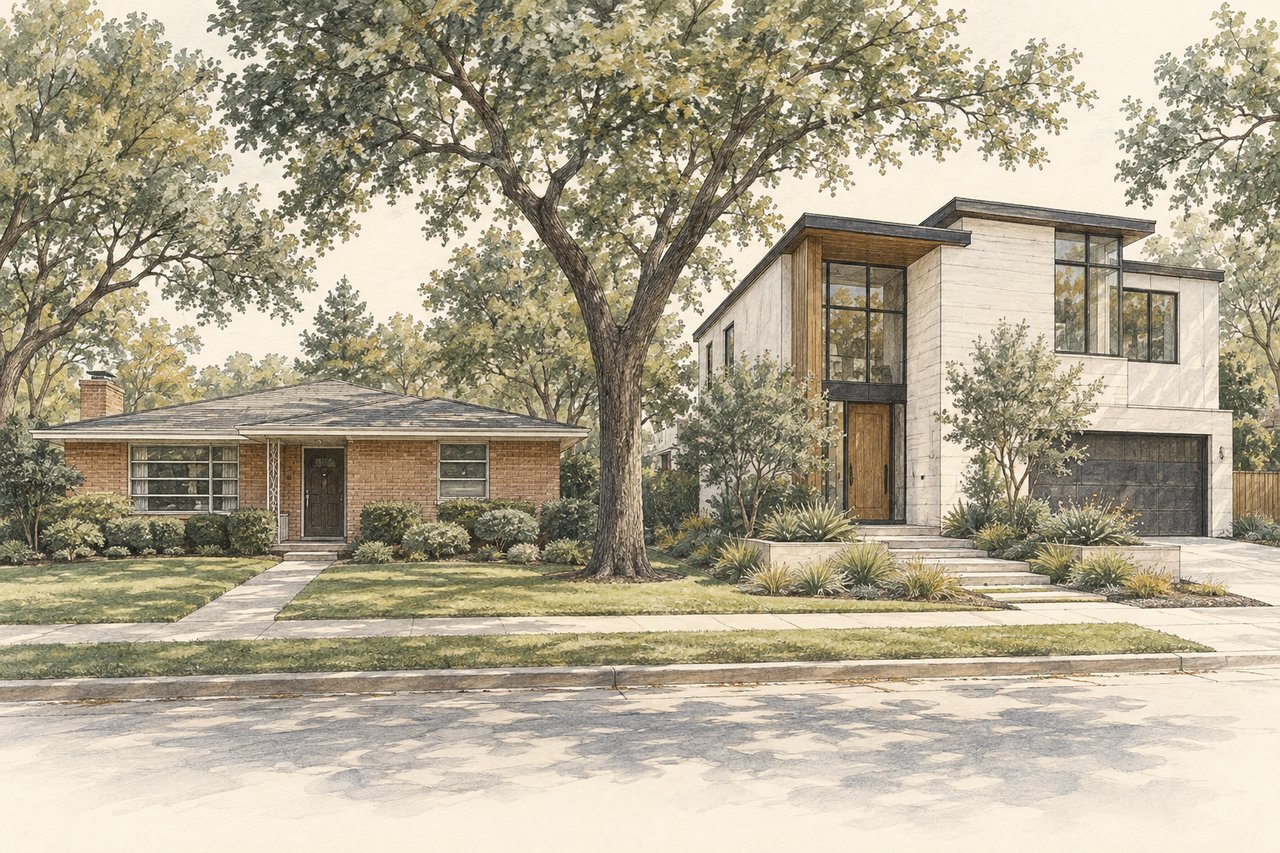
Celina used to carry a new-city premium that justified paying up. Against McKinney, an established suburb with its own strong schools, that premium has thinned to almost nothing on the median and gone negative on the sticker. That is the frontier discount, arriving in real time in the MLS data.
The Bill That Is Not on the Sticker Price
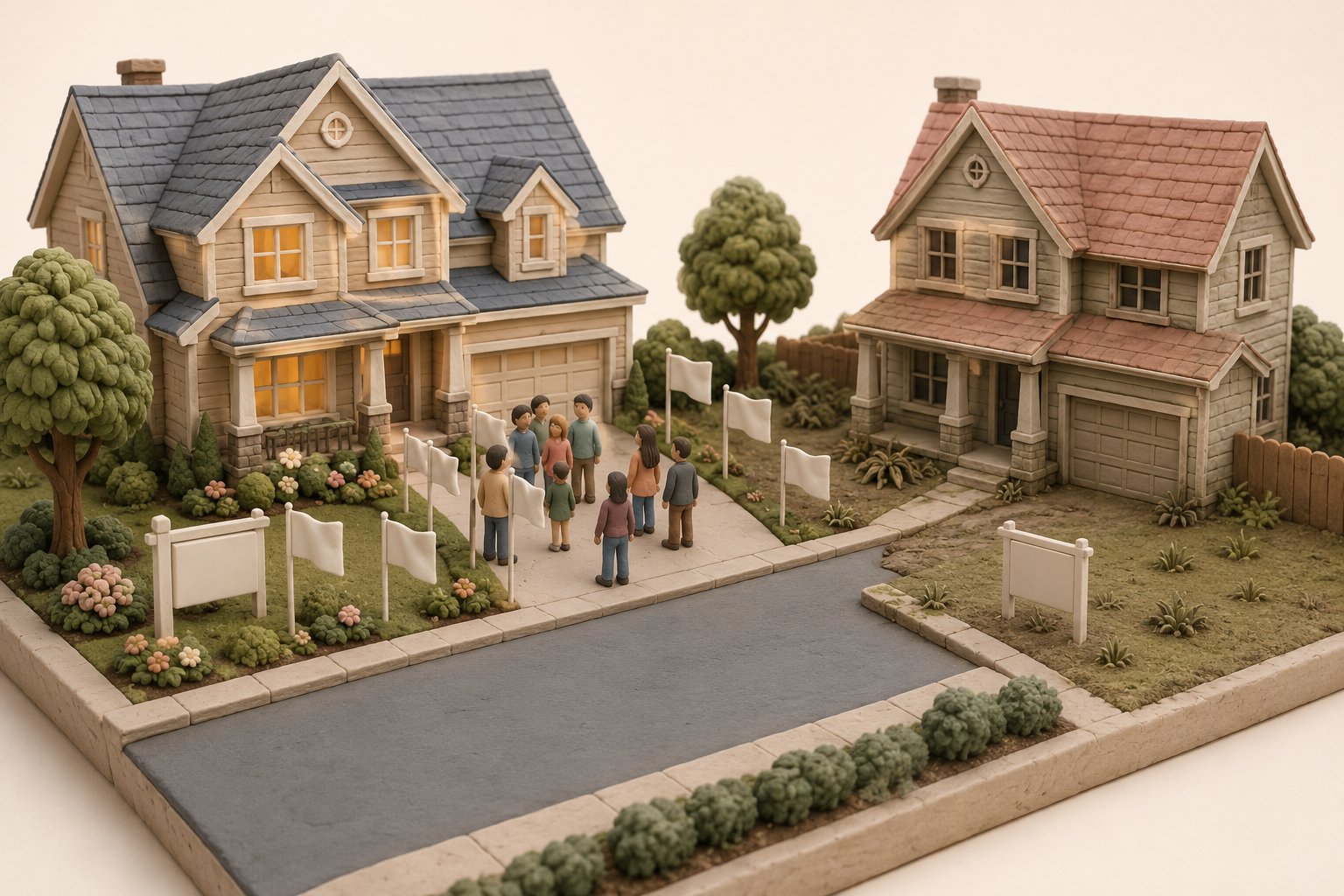
A lower price tag is not the same as a lower cost of ownership, and this is where the "cheaper" headline partly reverses on itself. Celina is cheaper to buy and more expensive to carry, and the second half of that sentence does not fit on a listing. Here are the adopted 2025 combined tax rates, per $100 of value, from each jurisdiction's own figures.
Entity | City | ISD | County + College | Combined per $100 |
|---|---|---|---|---|
Celina | $0.576401 | $1.2358 | $0.230563 | $2.042764 |
Frisco | $0.425517 | $1.0194 | $0.230563 | $1.675480 |
McKinney | $0.412284 | $1.1043 | $0.230563 | $1.747147 |
Sources: each jurisdiction's own adopted 2025 rates (full citations below). County and college rates are shown combined for readability.
The spread is driven mostly by the school district. Celina ISD's rate of $1.2358 per $100 is carrying a $2.295 billion bond, approved by voters in May 2025 to build ten new campuses including a second high school, plus a district whose enrollment is projected to roughly triple to about 22,291 students by 2033-34. On a $520,000 home, the school portion of the tax bill alone runs about $6,426 a year, repaid by every rooftop for decades.
Now add the assessment almost nobody prices in at the offer stage. Celina has 25 active Public Improvement Districts, per the city's own PID listing, including Cambridge Crossing, Celina Hills, and Creeks of Legacy. PIDs finance roads, utilities, and amenities through special assessments billed annually, on top of property tax, and the city page does not publish per-home figures, so most buyers never see the number until it is too late to negotiate. We pulled a real one: a lot in Wilson Creek Meadows, per the city's own PID administrator MuniCap, carries a 2023-24 annual PID installment of $2,004.99, against an outstanding principal balance of $31,730.77, payable in up to 30 annual installments. That is one specific lot, not a citywide average, but it turns "there might be a PID" into a real yearly number.
Put the tax rate and that PID example together and the "cheaper" story flips. A $515,000 Celina home at $2.042764 per $100 owes about $10,520 a year in property tax. Add the $2,004.99 PID and the carry is about $12,525, an effective rate near 2.43 percent of value. A $517,775 McKinney home at $1.747147 per $100, with no PID, owes about $9,046 a year, an effective rate near 1.75 percent. The Celina buyer pays roughly $3,479 a year more to carry a home that cost $2,775 less to buy. Strip the PID out and Celina's tax-only bill of $10,520 still runs about $1,474 a year above McKinney's, on the rate alone.
Two honest caveats: this uses one verified PID example, not a citywide average (and not every Celina home carries a PID, though most new-construction communities do), and it applies no homestead exemption, which would lower both bills for an owner-occupant. The direction holds: the corridor's newest, cheapest-to-buy homes are frequently its most expensive to hold.
If You Bought Near the Peak
The real question a recent buyer is asking is not "did I overpay." It is "can I sell without writing a check at closing?"
The Real Deal's 22 percent decline to a $520,000 new-home median implies a year-earlier median around $666,667 ($520,000 divided by 0.78), a proxy for what a recent-peak buyer paid. Selling into today's roughly $520,000 market, with transaction costs near 7 percent (about $36,400), leaves net proceeds around $483,600. The gap between the $667,000 purchase and the $483,600 net is about $183,000. To walk away without bringing cash, that seller needs a loan balance under $483,600, meaning they had to put down or pay down more than about 27 percent of the purchase price. A buyer who financed a more typical share is bringing cash to the closing table.
One caveat keeps this honest. The $666,667 figure is derived from the reported year-over-year decline, not a verified 2021 or 2022 sale price, because a clean Celina time series for those years did not clear our verification bar. Buyers who entered in 2021, before the run-up, came in lower and most likely still hold equity; the squeeze concentrates on the 2024 and early-2025 buyers who paid nearest the top. For them, realistic pricing from day one matters more in Celina than almost anywhere in DFW.
Frisco Already Ran This Play
If this movie feels new, it is only because you watched a different theater last time. Frisco was the fastest-growing city in the country through the 2000s, ranked number one nationally as late as the 2008 to 2009 window even as the national housing market was in freefall. Its population ran from 33,714 in the 2000 Census to 116,989 in 2010 to 200,509 by 2020. Same corridor, same builder wave. Frisco was the first Celina.
So what happened to prices when Frisco's builder wave crested into a national downturn? Not a Celina-style active decline. A 2010 D Magazine retrospective reported that DFW new-home construction fell about 73 percent from its 2006 peak by 2010, yet moderately priced suburbs, Frisco and McKinney named specifically, were "selling again at rates and prices approaching their prebust levels" by that year. Texas never ran prices up in the 2000s the way Phoenix and Las Vegas did, so it never had as far to fall, and the correction in the moderately priced North Texas suburbs was shallow and short.
The lesson cuts both ways. A growth suburb absorbing a builder wave normalizes rather than collapses, because the demand is real and the land holds its long-run value. But normalization is not the same as your 2024 purchase getting made whole on your timeline. Frisco rewarded patience over years, not sellers who needed out in the trough. Celina buyers today are buying into the digestion phase; sellers who overpaid are living in it.
Where the Discount Goes Next
The frontier discount is not a Celina story. It is a corridor story, and it moves. The same Vintage 2025 estimates that crowned Celina put Princeton at number three nationally (up 18.1 percent) and Melissa at number four (up 14.5 percent), with Anna reported at number five (up 10.2 percent), all Collin County exurbs one exit further out. Fulshear, near Houston, took the number two spot. The builders are already following the land north and east, exactly as they followed it into Celina five years ago.
The early-warning signs Celina flashed are lighting up in those markets now. DFW builders started 17.7 percent fewer homes year over year in the fourth quarter of 2025, per HousingWire, a classic sign of a market working through excess inventory, and builders in the Anna market are layering design-credit and closing-cost offers on top of the same rate buydowns that defined Celina's cycle. Anna's median already sits at $351,590, per our July 18 MLS warehouse pull, running the same growth-then-supply play Celina just finished. We do not yet have a verified Anna or Princeton price-decline percentage the way The Real Deal produced one for Celina, so we will not invent one, but the setup is unmistakable.
The Honest Counterargument
None of this is a bust. Sales are up 61 percent on new construction and 39 percent overall alongside the price decline, the signature of supply finally meeting years of pent-up demand, not demand disappearing. This is growth working as intended, and the Frisco analog says a growth suburb digests a builder wave rather than choking on it. The infrastructure bet is still being placed, not walked back: the Dallas North Tollway extension is under active construction through Celina and Prosper, with the next segment projected to open fall 2027 and at least 10 miles of future tollway frontage inside Celina's city limits. The correct read is not panic. It is a manage-it market, where the buyer manages the carrying cost and the seller manages the price expectation.
The Paragon Angle
Read the mechanism again: builders own two thirds of Celina's market and are pricing about $67,500 under resale on the sticker while beating sellers by roughly $539 a month on the financing. The "market price" in Celina is not set between neighbors. It is set in a sales office by a national builder managing quarterly absorption targets, and reset next quarter. When one seller controls two thirds of the shelf and owns the mortgage rate too, everyone else is a price taker.
That cuts two ways. A seller cannot win a rate-buydown fight, so sell what the builder cannot manufacture, mature trees, a premium lot, a completed neighborhood, and where true, freedom from a PID, then price to the first two weeks. A buyer holds rare leverage right now: Celina's 60.2 percent price-cut share and 6.63 months of supply both run hotter than Frisco's 52.8 percent and 4.5 months, so make the builder's discount your comp, never pay list, and add the bill that is not on the sticker: a Celina home can cost about $3,479 a year more to carry than a same-priced McKinney home once you stack the higher tax rate and a real PID, which is why "cheaper to buy" and "cheaper to own" are not the same sentence here. And to know where this plays next, look one exit north: Anna, Princeton, and Melissa are running the same play, and Frisco already showed how it ends, digestion then normalization, on the market's timeline, not the seller's.
Frequently Asked Questions
Why are home prices falling in Celina, TX?
Builders account for 66 percent of Celina's home sales and price new construction about $25 per square foot below resale, roughly $67,500 on a typical house, plus rate buydowns a resale seller cannot match. That undercutting, with sales volume up sharply, is pulling the median down even as demand stays strong.
Is Celina, TX a buyer's market right now?
By supply, yes. Celina carries 6.63 months of supply and 60.2 percent of active listings have taken a price cut, both running hotter than Frisco next door.
Is Celina actually cheaper to own, or just cheaper to buy?
Cheaper to buy, often more expensive to own. Celina's combined tax rate is $2.0428 per $100 versus McKinney's $1.7471, and one verified Celina PID adds $2,004.99 a year on top of property tax. On near-identical prices, a Celina home can cost roughly $3,479 a year more to carry than a McKinney home.
What is a PID in Celina, TX and how much does it cost?
A Public Improvement District is a special assessment, separate from property tax, that finances roads, utilities, and amenities in a community. Celina has 25 active PIDs. The city publishes no standard per-home amount, but one verified example, a Wilson Creek Meadows lot, carried a $2,004.99 annual installment, so confirm the exact assessment on any home before purchase.
How does Celina compare to McKinney and Frisco on price?
As of the second quarter of 2026, Celina's median, $515,000, sits below McKinney's, $517,775, for the first time in this data, though Celina is still cheaper per square foot. Frisco ($657,900) and Prosper ($872,500) remain meaningfully more expensive.
Conclusion
The numbers that told this story first are the ones to watch next: builder share of sales, months of supply, and the Celina-versus-McKinney median. When those turn, the leverage turns with them, and the frontier discount pooling in Celina today will already be moving another exit north to Anna, Princeton, and Melissa, exactly as it moved out of Frisco a generation ago. For now the window belongs to buyers who do the carrying-cost homework and to sellers who price to the market instead of testing it. Celina is not a cautionary tale. It is a growth suburb digesting a builder wave in public, and this corridor has run the play before and come out stronger. The question for anyone buying or selling here is not whether the growth is real. It is whether you are reading the mechanism or the headline.
Talk to Paragon
Ready to make the corridor's math work for you instead of against you? Let's connect and discuss your goals: call (469) 290-7593 or visit paragondfw.com/contact.
We track this market block by block, not headline by headline. If you are weighing a move into the northern corridor, or you bought in Celina a few years ago and want a clear-eyed read on where you stand against new construction, we can walk you through the numbers, including the carrying costs that never make the listing.
Reach us at [email protected] or call (469) 290-7593. More at paragondfw.com.
Sources
- U.S. Census Bureau - Population Growth Holds Steady in Midsized Cities Amid Widespread Slowdown (Vintage 2025 Population Estimates) - https://www.census.gov/newsroom/press-releases/2026/vintage-2025-city-town-pop-estimates.html
- CBS Texas - Nation's fastest-growing cities are in North Texas - https://www.cbsnews.com/texas/news/celina-princeton-melissa-anna-texas-fastest-growing-cities-north-dallas-census-data/
- KXAN - These were Texas' fastest-growing cities in 2025 - https://www.kxan.com/news/texas/2025-city-population-estimates/
- The Real Deal - New home sales explode in Celina, Texas - https://therealdeal.com/data/texas/2026/new-home-sales-explode-in-celina-texas/
- City of Celina - Public Improvement Districts - https://www.celina-tx.gov/1243/Public-Improvement-Districts
- MuniCap, Inc. - Celina PID annual report (Wilson Creek Meadows lot record) - https://search.municap.com/annual-report/2873779-0_2023-24
- City of Celina - Notice About 2025 Tax Rates - https://www.celina-tx.gov/DocumentCenter/View/14337/Notice-About-2025-Tax-Rates
- Celina ISD - Understanding the Tax Rate - https://www.celinaisd.com/vatre/understanding-the-tax-rate
- Community Impact - Roundup: See Collin County property tax rates for FY 2025-26 - https://communityimpact.com/dallas-fort-worth/frisco/government/2025/09/08/roundup-see-collin-county-property-tax-rates-for-fy-2025-26/
- Community Impact - Celina ISD to begin planning process after $2.3B bond passes - https://communityimpact.com/dallas-fort-worth/prosper-celina/education/2025/05/05/celina-isd-to-begin-planning-process-after-23b-bond-passes/
- Community Impact - Celina ISD looks to build 10 new schools with bond program as district faces fast growth - https://communityimpact.com/dallas-fort-worth/prosper-celina/education/2025/04/01/celina-isd-looks-to-build-10-new-schools-with-bond-program-as-district-faces-fast-growth/
- Community Impact - 396 new homes coming to Celina (Yardly build-to-rent) - https://communityimpact.com/dallas-fort-worth/prosper-celina/development/2025/03/28/396-new-homes-coming-to-celina/
- Community Impact - Frisco crosses 200K population, tops list of fastest-growing large US cities - https://communityimpact.com/dallas-fort-worth/frisco/people/2020/05/21/frisco-crosses-200k-population-tops-list-of-fastest-growing-large-us-cities/
- D Magazine - How Missing the Bubble Hurt Dallas Real Estate (April 2010) - https://www.dmagazine.com/publications/d-magazine/2010/april/how-missing-the-bubble-hurt-dallas-real-estate/
- HousingWire - Texas home prices and builder starts, 2026 - https://www.housingwire.com/articles/texas-home-prices-2026/
- Community Impact - Development plans underway for future tollway corridor in Prosper, Celina - https://communityimpact.com/dallas-fort-worth/prosper-celina/development/2026/05/21/development-plans-underway-for-future-tollway-corridor-in-prosper-celina/
- Local market figures: Paragon MLS warehouse (NTREIS), pulled 2026-07-18.